Kota Doria and crafts
Kota Stone vs Vitrified Tiles: Which Floor Suits You?
Written by Kota Market Editorial Team · Updated
If you are building or renovating in Kota, the flooring question usually comes down to two options: the local Kota stone that has been laid in homes across India for generations, or vitrified tiles from a showroom. This guide compares Kota stone vs vitrified tiles honestly, room by room, so you can decide which suits your home. It does not list prices; ask several suppliers for written quotes and compare them like for like.
What each one is
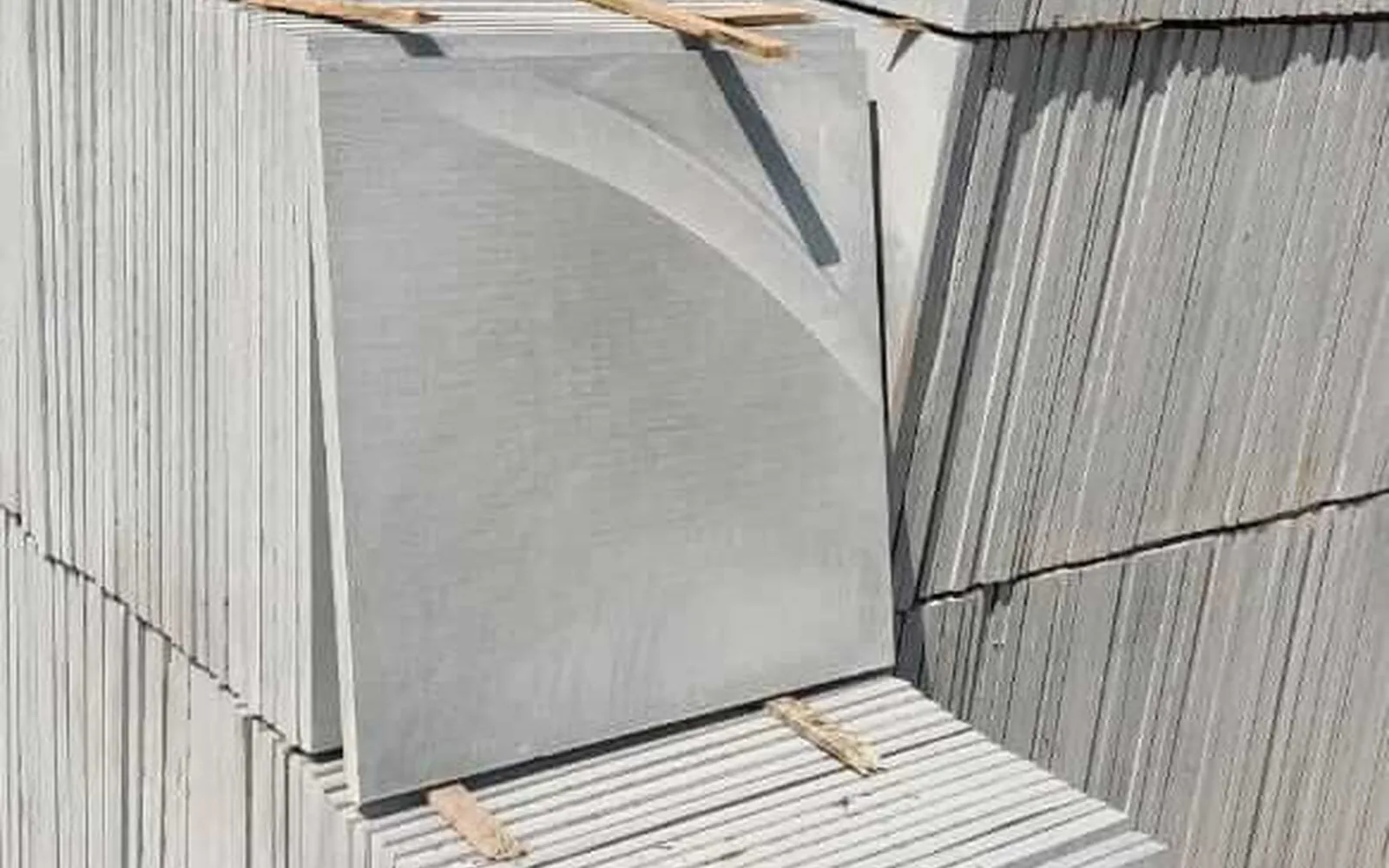
Kota stone is a fine-grained natural limestone quarried in the Kota region. It comes in shades of green-grey and blue-grey, and in finishes from rough (natural or cobbled) to machine-polished. Our Kota stone guide covers colours, finishes and what to check in a batch.
Vitrified tiles are ceramic tiles made from clay and minerals fired at high temperature so that the body becomes glass-like and absorbs very little water. Common types include:
- Glazed vitrified tiles (GVT): a printed design under a glaze, so they can imitate wood, marble or stone.
- Double charge: two layers of pigment pressed together for a thicker wear layer.
- Full body: the colour runs through the whole tile, so chips show less.
- Soluble salt: an older polished type where the colour sits in the top layer.
Side-by-side comparison
| Kota stone | Vitrified tiles | |
|---|---|---|
| Material | Natural limestone | Fired ceramic |
| Look | Natural, varied, earthy | Uniform, many designs |
| Water and stains | Can absorb oil and dull with acids | Very low absorption, stain-resistant |
| Hardness and wear | Tough, suits heavy traffic | Hard surface, glaze can wear or chip |
| Feel | Cool underfoot | Cool, often smoother |
| Slip when wet | Rough finishes grip well; polished can slip | Polished can be very slippery; matt and anti-skid available |
| Repairs | Can be ground and re-polished | Damaged tiles usually replaced |
| Joints | Larger slabs, fine joints after polishing | Visible grout lines, spacers needed |
| Laying | Mortar bed, then machine polishing on site | Adhesive or mortar, usually no on-site polishing |
Room by room
- Verandahs, terraces and courtyards: Kota stone, usually in a rough or natural finish, is the traditional choice. It handles heat, wear and outdoor dust well.
- Stairs and entrances: Kota stone’s toughness and grip make it popular. If you choose tiles, use dedicated step tiles or nosings with a non-slip edge.
- Living rooms and bedrooms: both work. Vitrified tiles give a seamless modern look; polished Kota stone gives a cool, understated floor that ages well.
- Kitchens: vitrified tiles resist oil and turmeric better. If you use Kota stone, seal it and wipe spills quickly.
- Bathrooms: choose anti-skid tiles or rough-finished Kota stone. Avoid high-gloss surfaces on wet floors.
- Shops and godowns: Kota stone has long been used in commercial spaces for its toughness and low upkeep.
Living with each floor
Kota stone needs simple care: sweep, mop with plain water or a pH-neutral cleaner, and avoid acids such as lemon, vinegar and harsh toilet cleaners. When it dulls after years of use, it can be ground and re-polished. Our guide to cleaning and polishing a Kota stone floor covers stains and hiring a polisher.
Vitrified tiles need even less routine care, but grout lines collect dirt and may need periodic cleaning and resealing. A chipped tile cannot be polished out, so ask your supplier for a few spare tiles from the same batch; colours vary between batches.
What to check before buying
For Kota stone
- See the actual batch, not a showroom piece. Natural stone varies.
- Check thickness and edges. Ask for the thickness on the quote, and look for cracks, chipped corners and soft patches.
- Agree the finish (rough, semi-polished, mirror-polished) and who polishes after laying.
- Order extra for cutting waste and future repairs.
For vitrified tiles
- Open a box and check that tiles are flat, square and the same shade. Note the batch and shade code printed on the box.
- Check the finish for wet areas: matt or anti-skid rather than gloss.
- Read the box for the type (GVT, double charge, full body), size and the standard the maker declares.
- Ask about adhesive and spacers; laying method affects how long the floor lasts.
For both, get a written quote that states the material, finish, size, thickness, laying method, who does the polishing or grouting, and who clears the debris. A clear quote prevents most disputes; our no exchange no refund guide explains your rights if material arrives different from what was agreed.
Comparing with other stones
If you are also considering granite or marble, read our comparison of Kota stone vs granite vs marble. And if your renovation includes wiring or plumbing work, our checklist for hiring an electrician or plumber in Kota helps you plan the trades in the right order.
Heat, sound and comfort
Both floors feel cool underfoot, which is welcome in Kota’s summers, and both can feel cold on winter mornings; a few rugs or dhurries solve that. Stone and tile both carry footstep and furniture noise, so felt pads under chairs help in rented flats. Polished surfaces show dust and footprints more than matt ones, whichever material you choose.
Winter comfort on hard floors
Both stone and tile feel cold underfoot on December mornings in Kota. Dhurries and rugs help, and so does choosing heating carefully. Our winter shopping guide compares heater types, explains the ISI checks and warns why a coal angithi must never be used in a closed room. If you are planning new wiring for heaters or geysers along with a new floor, our electrician and plumber guide explains how to agree the work in writing.
The short answer
Choose Kota stone if you want a tough, cool, repairable floor for heavy-use or outdoor spaces and like a natural look. Choose vitrified tiles if stain resistance, a uniform finish or a particular design matters most. Many Kota homes sensibly use stone outside and on stairs, and tiles in kitchens and living rooms.
Frequently asked questions
Is Kota stone better than vitrified tiles?
Neither is better everywhere. Kota stone is hard-wearing, cool and easy to re-polish, which suits verandahs, stairs and heavy-use areas. Vitrified tiles resist stains better and give a uniform, modern look. Many homes in Kota use both.
Which is more slippery?
Highly polished surfaces of either type can be slippery when wet. Polished vitrified tiles are often very smooth; for bathrooms, kitchens and outdoor areas choose a matt, textured or anti-skid finish, or a rough-finished Kota stone.
Can vitrified tiles be repolished like Kota stone?
Generally no. Glazed vitrified tiles have a printed surface that cannot be ground back, so worn or chipped tiles are usually replaced. Kota stone can be ground and re-polished several times over its life.
Does Kota stone stain?
It can. Oil, turmeric and some spills can soak in if left, and acidic cleaners or liquids such as lemon juice can dull the surface. Sealing and prompt cleaning help; see our cleaning guide.
Sources
Editorial team
The Kota Market team writes and updates the shopping guides on this site and corrects them when readers point out errors.