Kota Doria and crafts
Kota Doria: The Featherlight Weave That Made Kota Famous
Written by Kota Market Editorial Team · Updated
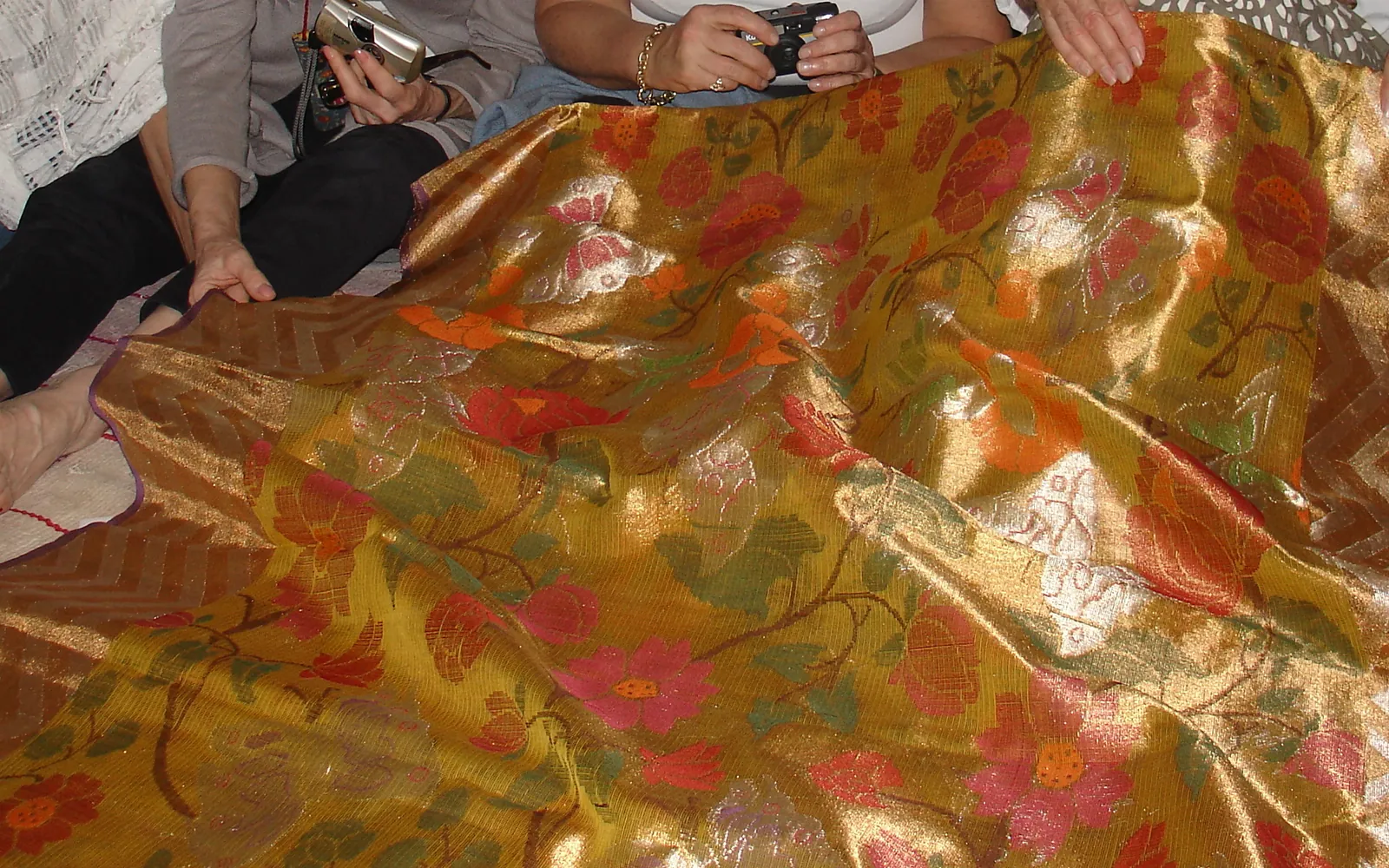
Ask anyone who follows Indian textiles what Kota is known for and Kota Doria comes up first. It is a featherlight, open-weave fabric with a fine square check, woven on handlooms in and around Kota, Rajasthan. A Kota Doria saree weighs very little, lets air through on a hot afternoon and still drapes neatly, which is why it has stayed popular for generations while many regional weaves have faded.
This guide explains what makes the fabric distinctive, how it is woven, how the name is protected and how to look after a piece once you own one. If you are about to buy, read it together with our guides on where to buy genuine Kota Doria and how to tell it from a power-loom copy.
What Kota Doria is
Kota Doria is a plain-weave fabric in which some threads are grouped to form a regular grid of small squares. Weavers call each square a khat. The grid is created by alternating cotton and silk yarns in both the warp (the lengthwise threads) and the weft (the crosswise threads). Cotton gives the fabric body; silk gives it a slight sheen and keeps it fine.
The result is cloth that is partly transparent. Hold a length up to the light and you can see the khat pattern clearly. Many sarees add zari (metallic thread) borders, small woven motifs (butis) or, more recently, block prints and embroidery on top of the base weave.
You will see three broad types for sale:
- Cotton-silk Kota Doria, the classic mix and the one most people mean by the name.
- Pure cotton Kota Doria, more affordable and very comfortable for everyday wear.
- Zari Kota Doria, with metallic thread in the border or body, usually for weddings and festivals.
How it is woven
Kota Doria is woven on handlooms, traditionally pit looms where the weaver sits with legs in a pit below the loom. Kaithoon, a weaving town a short drive from Kota city, is the best-known centre, and weaving families also work in other villages around the district.
Before weaving, the warp yarn is usually strengthened with a starch paste so the fine threads do not snap under tension. Weavers in the region often describe this paste as being made with rice and onion juice; recipes vary between families. Getting the khat squares even across six metres of fabric depends on the weaver’s control of every throw of the shuttle, which is why the work is slow and why a handwoven saree costs noticeably more than a machine-made look-alike.
Because the grid is built by hand, small irregularities are normal. A genuine piece rarely has the perfect, mechanical uniformity of a power-loom copy.
Why the name is protected
Kota Doria is registered as a Geographical Indication (GI) in India. A GI links a product’s name to the place and method that give it its character, in the same way Darjeeling tea or Kanchipuram silk are protected. In practice, it means the name is meant to describe handwoven fabric made in the defined Kota region, and registered producers can use the GI logo.
You can look up the registration and the list of authorised users on the GI registry’s public search (linked in the sources below). Some genuine pieces also carry the government’s Handloom Mark or the India Handloom Brand label. A label is helpful evidence, but it is not the only test; many small weavers sell without one. Our power-loom checklist covers the physical checks.
Why it stays cool
The khat squares are small open windows in the cloth. They let air move through the fabric and let sweat evaporate quickly, which is why Kota Doria is a summer staple across Rajasthan, where temperatures in May and June are fierce. The cotton-silk mix is also light enough that a full saree is comfortable for long days.
The trade-off is that the fabric is somewhat sheer. Most wearers pair a Kota Doria saree with a matching petticoat, and suit sets often come with a lining or are stitched with one.
Caring for a Kota Doria piece
A well-kept Kota Doria saree lasts for years. The weave is fine, so treat it gently:
- First wash: wash it on its own in cold water in case dyes bleed. Dry-clean pieces with heavy zari or embroidery.
- Washing: hand-wash with a mild liquid detergent. Do not scrub or wring; press the water out.
- Drying: dry in the shade. Strong sun fades colours and can weaken silk.
- Starch: many owners give cotton Kota Doria a light starch to restore its crisp fall.
- Ironing: use a low setting with a cotton cloth between the iron and the saree, especially over zari.
- Storage: fold it in a cotton or muslin cloth and refold occasionally so the creases do not wear into the fine threads.
Kota Doria beyond sarees
The same weave is used for dupattas, unstitched suit sets, stoles, kurtas and even curtains. Dupattas and suit material are a practical way to try the fabric for less money, and a Kota Doria dupatta is one of the most useful gifts to buy in Kota. For home use, light Kota Doria curtains soften harsh sunlight without blocking airflow; we cover that in decorating your home the Kota way.
Who keeps the craft alive
Kota Doria is a household craft. Families often share the work: preparing yarn, setting up the warp, weaving and finishing. Buying directly from weavers or from sellers who can tell you who made a piece helps more of the price reach the people at the loom. Our article on Kota’s artisans looks at the wider craft community around the city.
Before you buy
- Decide what you want: cotton for daily wear, cotton-silk for a classic saree, zari for occasions.
- Look at the khat squares and the border closely in daylight.
- Ask where it was woven and whether the seller can show a handloom or GI label.
- Compare prices across a few sellers; a very low price for “pure handloom cotton-silk” is a warning sign.
Our buyer’s guide explains where in and around Kota to start looking.
After you buy: labels, care and similar fabrics
Three questions come up again and again once people own their first piece. The first is about labels: what the “GI” printed on a tag actually proves. Our guide to the Kota Doria GI tag explains how to search the GI Registry and why a missing label is not proof of a fake. The second is about washing. Plain cotton Kota Doria hand-washes well in cold water, but silk-cotton pieces and anything with real zari are safer dry cleaned at first; our step-by-step guide on how to wash a Kota Doria saree covers starching, drying in the shade and ironing on the reverse. The third is how Kota Doria compares with the other famous light handlooms of central India. If you are choosing between them, read Kota Doria vs Chanderi vs Maheshwari, which compares weave, feel, care and the occasions each suits.
Frequently asked questions
What is Kota Doria made of?
Traditional Kota Doria combines cotton and silk yarns. Many pieces also use zari (metallic thread) for borders or motifs. Pure cotton versions are also woven and sold as Kota Doria cotton.
Why is it called Kota Doria or Kota Masuria?
Doria refers to the thread-like check lines of the weave. The older name Masuria is usually linked to a local tradition that weavers from Mysore were brought to the Kota region in the past; treat the details of that story as tradition rather than documented history.
Is Kota Doria good for summer?
Yes. The open khat squares let air move through the fabric, so it feels light and cool. That same openness makes it slightly sheer, so many people wear it with a lining or a suitable petticoat.
How should I wash a Kota Doria saree?
Hand-wash in cold water with a mild detergent, or dry-clean pieces with heavy zari. Do not wring it. Dry it flat or on a line in the shade, and iron on a low setting, ideally with a cloth between the iron and the fabric.
Can I buy Kota Doria outside Kota?
Yes, it is sold across India and online, but copies are common. Use the checks in our power-loom guide and ask the seller for handloom or GI details before you pay.
Sources
Editorial team
The Kota Market team writes and updates the shopping guides on this site and corrects them when readers point out errors.
