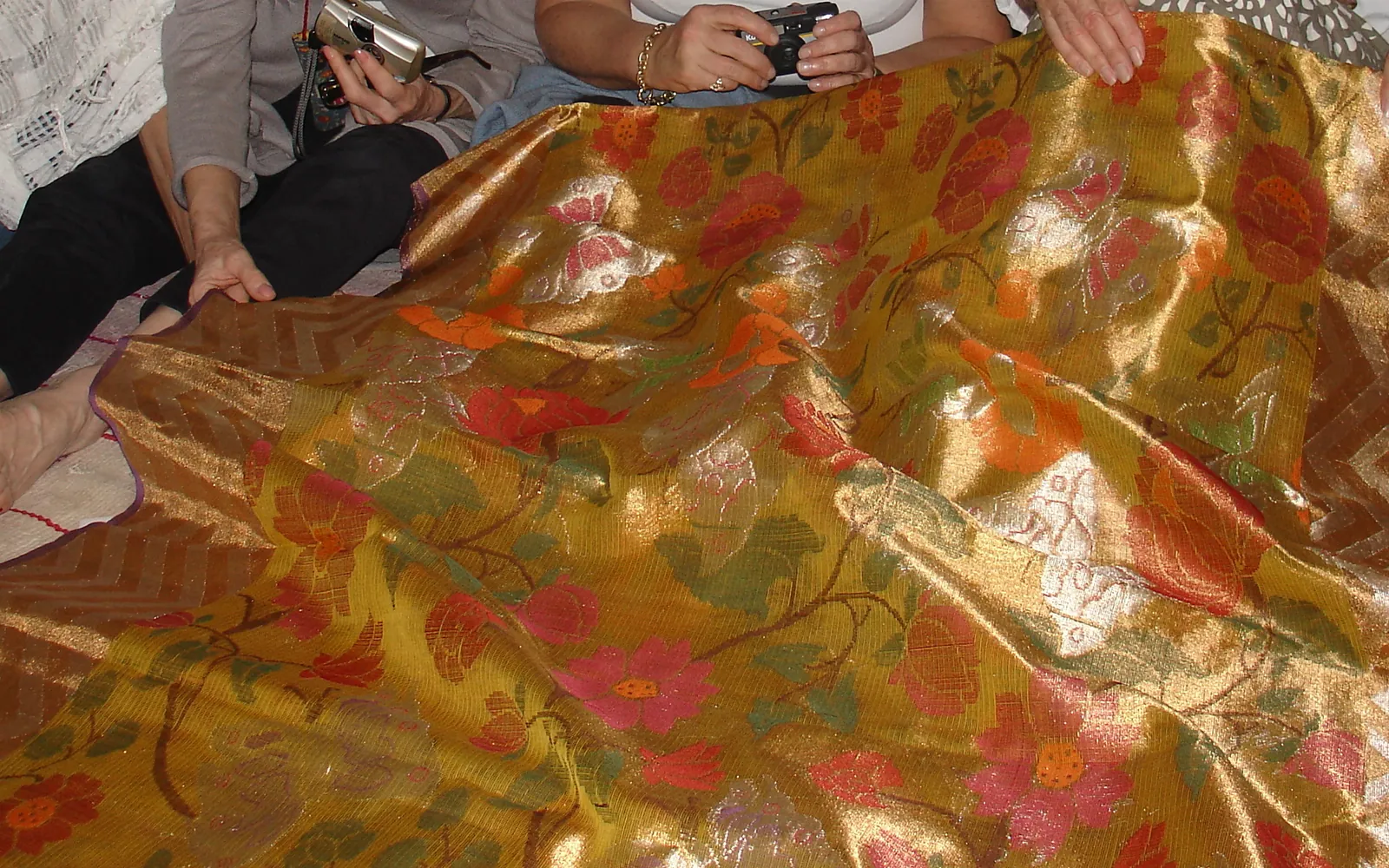
Kota Doria and crafts
Kota Doria vs Power-Loom Copies: How to Spot the Difference
Written by Kota Market Editorial Team · Updated

Because handwoven fabric is popular, there are many cheaper look-alikes. The question of Kota Doria vs power-loom fabric comes down to a few physical checks you can do in a shop in two or three minutes. None of them needs special tools, and together they are far more reliable than any single label.
If you are new to the fabric, start with what Kota Doria is and how it is woven. If you already know what you want, our buyer’s guide covers where to shop.
Why copies exist
Handweaving a Kota Doria saree takes days of skilled work. A power loom can produce a similar-looking grid much faster and with cheaper yarn, often polyester or a polyester blend. That fabric is not illegal and can be a sensible buy at the right price. The problem is when it is sold as handwoven Kota Doria at a handloom price.
Check 1: the khat squares
Hold the fabric up to daylight and look at the grid of small squares (the khat).
- Handwoven: squares are slightly irregular in size and spacing. Lines may wander very slightly. The fabric looks airy.
- Power loom: squares are mechanically identical across the whole length, with perfectly straight lines.
Look across a wide area, not just one spot. Perfect uniformity across metres of cloth is the single biggest giveaway.
Check 2: the selvedge
The selvedge is the finished edge along the length of the fabric.
- Handwoven: the edge is firm but often slightly uneven, and you may see small loops where the weft turned.
- Power loom: the edge is very straight and regular, sometimes with a fringe of cut threads or a stitched or fused edge.
Check 3: the reverse of the border
Turn the border over.
- Handwoven: woven motifs and zari borders usually show floating threads on the back that follow the pattern, with some irregularity.
- Printed or machine-made: a printed border shows little or no pattern on the reverse. Machine jacquard borders look very regular on both sides.
Check 4: weight and feel
Genuine cotton-silk Kota Doria is remarkably light and slightly crisp. Gather a fold in your hand: it should feel airy, not heavy or slippery.
- Heavier, slippery or very smooth fabric often contains polyester.
- Very stiff fabric may have been heavily finished to hide a loose weave.
Check 5: a burn test on a loose thread
This is the most decisive test for fibre, but use it carefully. Only test a stray loose thread, never cut the fabric, and ask the seller first. Many sellers will do it for you if you ask.
- Cotton burns quickly, smells like burning paper and leaves a soft grey ash.
- Silk burns slowly, smells like burning hair and leaves a crushable black bead.
- Polyester melts and shrinks from the flame, smells chemical and leaves a hard bead that does not crush.
A cotton-silk saree should give cotton and silk results from the respective threads, not a hard plastic bead.
Check 6: labels and paperwork
Look for:
- The registered Kota Doria GI logo on labels or tags.
- The Handloom Mark or the India Handloom Brand label.
- A bill that describes the item as handwoven Kota Doria with its fibre.
Labels are good evidence when genuine, but they can be copied, and many small weavers sell without them. Treat labels as one check among six, and check the GI registry (linked below) if you want to confirm a producer.
Check 7: the price
There is no fixed price for Kota Doria, and we do not publish one because prices change. But compare the same type of piece across a few sellers. If one “pure handwoven cotton-silk” saree is dramatically cheaper than every other, the most likely explanation is that it is not what it says. Our shopping tips explain how to compare without haggling a weaver down to an unfair price.
Quick comparison
| Check | Handwoven Kota Doria | Power-loom copy |
|---|---|---|
| Khat squares | Slightly irregular | Perfectly uniform |
| Selvedge | Firm, slightly uneven | Very straight or cut/fused |
| Border reverse | Floating threads follow the motif | Printed or very regular |
| Weight | Very light, crisp | Often heavier or slippery |
| Burn test | Cotton ash and silk bead | Hard melted bead (polyester) |
| Price | Reflects days of weaving | Far lower |
If you think you bought a copy
Go back to the seller with the bill and the piece. Most problems are settled at the counter. If it is not resolved, India’s National Consumer Helpline accepts consumer complaints online. Keeping a bill that describes the item properly makes any complaint much easier, which is why we recommend asking for one every time.
Buying genuine pieces keeps weaving viable for the families who do it. Read more about them in the story of Kota’s artisans.
Not sure it is Kota Doria at all?
Sometimes the question is not handwoven versus power loom but which fabric you are looking at. Chanderi and Maheshwari sarees are also light handwoven fabrics and are sold in the same shops; Chanderi has a sheer gloss and small woven butis, Maheshwari a reversible border, and neither has the khat squares. Our comparison of Kota Doria vs Chanderi vs Maheshwari shows how to tell them apart in daylight. For what a “GI tagged” label does and does not prove, and how to look up an authorised user, see our Kota Doria GI tag guide. And if a seller refuses to take back a piece that turned out to be misdescribed, our guide to consumer complaints explains the steps from the counter to the District Commission.
Frequently asked questions
Is power-loom Kota Doria bad?
Not necessarily. Power-loom fabric can be cheaper and perfectly wearable. The problem is when it is sold as handwoven Kota Doria at a handloom price. Buy what you want, but know what you are paying for.
Can a shop sell power-loom fabric as Kota Doria?
Kota Doria is a registered Geographical Indication meant to describe handwoven fabric from the Kota region. Selling a copy as genuine Kota Doria is misleading. If you think you were misled, keep the bill and raise it with the seller first.
What does the khat look like on a genuine piece?
Small squares formed by grouped threads, slightly uneven in size and spacing across the fabric. Under a strong light the squares look airy and the grid lines are fine.
Does a GI or handloom label guarantee it is real?
A genuine label is strong evidence, but labels can be copied and many honest small weavers do not use them. Combine label checks with the physical checks in this guide.
What if the saree has zari?
Real zari is costly and is usually reflected in the price. Imitation zari (metallic polyester) is common and fine in itself, but the seller should say which it is.
Sources
Editorial team
The Kota Market team writes and updates the shopping guides on this site and corrects them when readers point out errors.