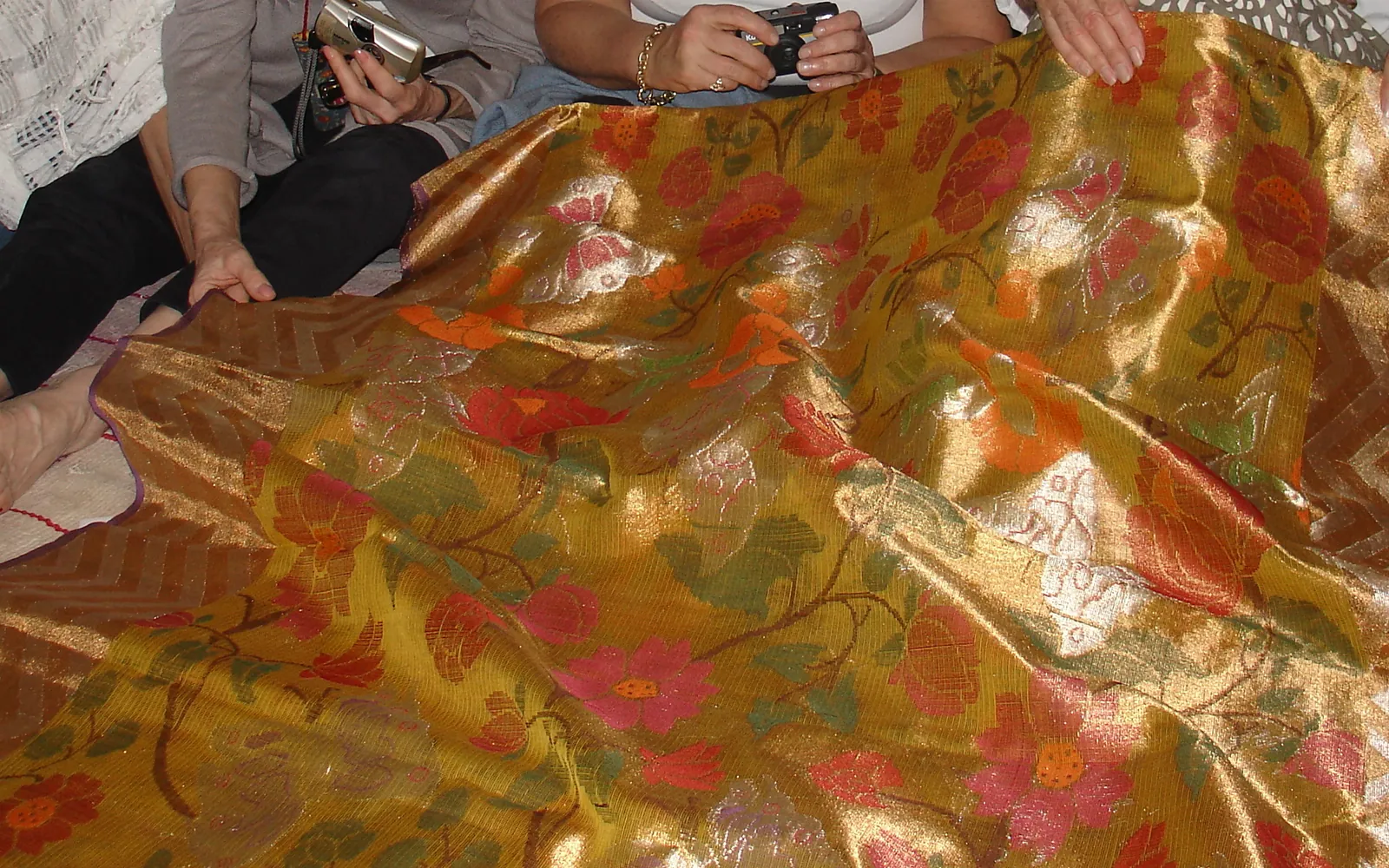
Kota Doria and crafts
Kota Doria GI Tag: What It Means and How to Check It
Written by Kota Market Editorial Team · Updated

You will often see “GI tagged” printed on Kota Doria labels, shop boards and online listings. The Kota Doria GI tag is real and it matters, but it is widely misunderstood. Some buyers think every genuine piece must carry a GI label; others think a label settles the question. Neither is quite right. This guide explains what the Geographical Indication actually protects, how to check a registration and an authorised user yourself, and how to use the label sensibly alongside the physical checks that experienced buyers rely on.
If you are new to the fabric, start with what Kota Doria is and how it is woven.
What a Geographical Indication is
A Geographical Indication (GI) is a sign used on products that have a specific geographical origin and qualities or a reputation that come from that origin. In India, GIs are registered and protected under the Geographical Indications of Goods (Registration and Protection) Act, 1999, administered by the GI Registry, part of Intellectual Property India.
Registration does two things that matter to a buyer:
- It ties the name to a defined product from a defined area, described in the registration documents.
- It allows producers in that area to register as authorised users, who have the right to use the GI on their goods.
Misusing a registered GI, for example selling something from elsewhere under the protected name, is an infringement under the Act.
What the Kota Doria GI covers
Kota Doria is registered as a GI for the handwoven fabric of the Kota region, the famous light fabric with the square khat pattern woven on pit looms around Kaithoon and nearby weaving areas. The registration documents describe the product, the area and the method. You can read the registration details yourself on the GI Registry’s public search; search for “Kota Doria”.
In plain terms: a power-loom fabric made to look like Kota Doria, or a handwoven fabric made somewhere else in the same style, should not be sold as Kota Doria.
What the labels you will see actually mean
Three different marks are commonly confused:
| Mark | What it tells you | What it does not tell you |
|---|---|---|
| Kota Doria GI logo or “GI” label | The seller claims the product is the registered GI product, ideally from an authorised user | It does not prove the label is genuine; logos can be printed by anyone |
| Handloom Mark | The product is certified as handwoven under the Handloom Mark scheme | It does not say where the fabric was woven |
| India Handloom Brand | The product is handwoven and meets the scheme’s quality and process standards | It does not cover every genuine handloom product; many weavers do not apply |
A piece can be genuine Kota Doria with none of these, and a fake can carry a printed copy of any of them. That is why labels are one check among several.
How to check a GI registration
- Open the GI Registry public search (linked in the sources below).
- Search for the GI name, “Kota Doria”. You will see the registration, its class of goods and the registered proprietor.
- Open the registration to see the details and the documents, which describe the product and the geographical area.
This confirms the GI exists and what it covers. It does not, on its own, tell you anything about a particular saree.
How to check an authorised user
If a seller says they or their supplier are a registered authorised user of the Kota Doria GI:
- Ask for the authorised user’s name, as registered, and where they are based.
- Look it up in the GI Registry’s register of authorised users (Part B), linked below, or through the public search.
- Check that the name and place match what the seller told you.
A seller who is genuinely registered will usually be happy to tell you. If the seller is vague, that is not proof of anything, but it does mean you should rely on the physical checks.
Why a missing label is not proof of a fake
Kota Doria is woven largely by families working at home, often for master weavers, cooperatives or traders who finish and sell the cloth. Registering as an authorised user involves paperwork that many small producers have not done, and some sell perfectly genuine cloth without any tag at all. Buying directly from weaving households in Kaithoon, for example, you may get an excellent piece with no label.
On the other hand, printing a GI logo on a label costs almost nothing. So treat a label as evidence, not proof.
The checks that matter more than a label
Our power-loom comparison guide covers these in detail. In short:
- Khat squares: slightly irregular on a handwoven piece; mechanically uniform on a power-loom copy.
- Selvedge: firm but slightly uneven by hand; dead straight, cut or fused by machine.
- Border reverse: woven motifs show floating threads that follow the pattern.
- Weight: genuine cotton-silk Kota Doria is remarkably light and crisp.
- Fibre: a careful burn test on a stray thread, with the seller’s agreement, separates cotton and silk from polyester.
- Price: dramatically cheaper than every comparable piece usually means it is not what the label says.
GI tag vs handloom labels
The GI logo is not the only label you will see on handwoven textiles. The government’s Handloom Mark certifies that a product is handwoven, and the India Handloom Brand adds standards for quality, design and social and environmental compliance. They are separate systems from the GI, run under different rules, and a genuine Kota Doria piece may carry any combination of them or none. Our guide to the Handloom Mark vs India Handloom Brand explains each one. Fairs and festival markets, such as the Kota Dussehra Mela, are where look-alike labels are most common, so read any label closely there.
Get it in writing
Whatever the label says, ask for a bill that describes the item: “handwoven Kota Doria”, the fibre (cotton, cotton-silk) and whether the zari is real or imitation. A clear description on the bill is what makes a later complaint straightforward.
If a GI-labelled piece turns out to be a copy
- Go back to the seller with the piece and the bill. Many disputes end at the counter.
- Register a consumer complaint with the National Consumer Helpline if the seller will not help. Our step-by-step consumer complaint guide explains the process from Kota.
- Report GI misuse. Misuse of a registered GI can be raised with the GI Registry and with the registered proprietor of the GI.
A fair word for weavers
The GI exists to protect weavers, not to make buyers suspicious of them. Many of the families who weave Kota Doria earn modest incomes from slow, skilled work. Asking informed questions, checking the weave and paying a fair price are the best ways to make sure the name keeps its value. Read more about them in the story of Kota’s artisans, and once you have a genuine piece, our guide on how to wash a Kota Doria saree will help it last.
Frequently asked questions
Does Kota Doria have a GI tag?
Yes. Kota Doria is registered as a Geographical Indication with the GI Registry of Intellectual Property India. You can confirm the registration yourself on the GI Registry's public search.
Can only GI-registered weavers sell Kota Doria?
Under the GI Act, authorised users registered for a GI have the right to use the indication on their goods. In practice, many weavers sell through cooperatives, master weavers or shops, and not every genuine handwoven piece carries a GI label. A missing label alone does not prove a piece is fake.
How do I check whether a seller is an authorised user?
Ask for the name of the producer or authorised user, then look it up in the GI Registry's register of authorised users. If the seller cannot tell you anything about the producer, rely more heavily on physical checks.
Is the Handloom Mark the same as the GI tag?
No. The Handloom Mark and the India Handloom Brand are separate schemes that certify a product as handwoven (and, for the brand, meeting quality standards). The GI ties the name to the region. A piece can carry one, both or neither.
What should I do if a 'GI tagged' piece turns out to be power-loom?
Go back to the seller with the bill first. If that fails, you can register a complaint with the National Consumer Helpline, and misuse of a registered GI can also be reported to the GI Registry.
Sources
Editorial team
The Kota Market team writes and updates the shopping guides on this site and corrects them when readers point out errors.