Kota Doria and crafts
How to Check Pure Silk: Silk Mark, Burn Test and Zari Tips
Written by Kota Market Editorial Team · Updated
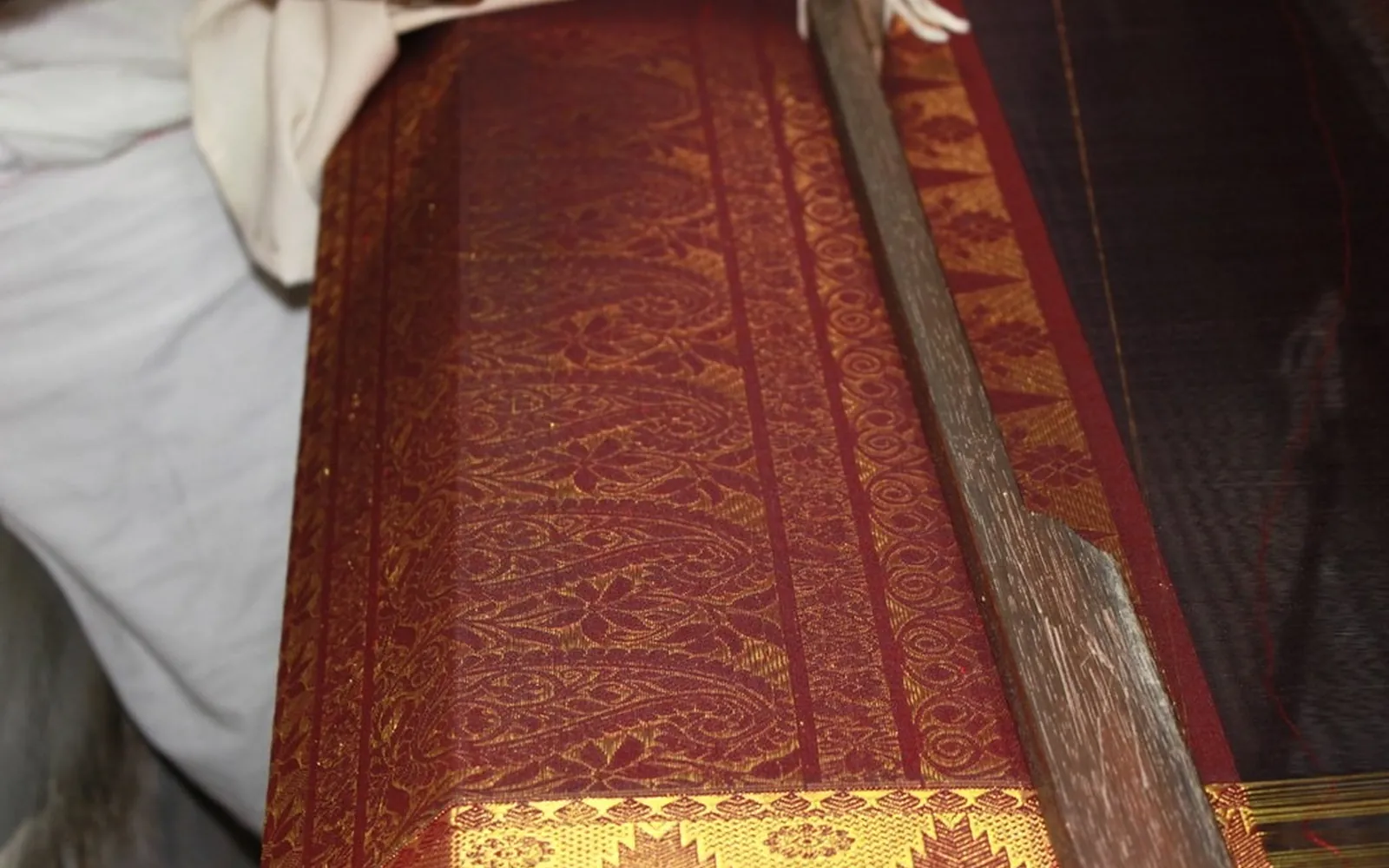
Wedding season in Rajasthan brings a rush of saree buying, and a silk saree is often the most expensive textile a family buys all year. Kota’s shops sell everything from local Kota Doria to Banarasi, Kanjeevaram-style and printed silks brought in from other states. This guide explains how to check pure silk before you pay: what the Silk Mark label means, which hand tests actually help, how to read the zari, and what to put on the bill.
We do not name shops or quote prices. Silk prices depend on the variety, the weight, the weave and especially the zari, so the aim here is to help you judge what you are being sold.
The types of silk you will see
India produces several kinds of natural silk, each with its own look:
- Mulberry silk is the smooth, lustrous silk used in most wedding sarees, including Banarasi and Kanjeevaram styles.
- Tasar (tussar) silk has a rich, slightly textured surface and a natural golden-beige colour.
- Eri silk is soft, matte and warm, sometimes called “peace silk”.
- Muga silk from Assam has a natural golden sheen.
Next to these you will find art silk (artificial silk, usually viscose or polyester), silk blends such as silk-cotton, and fabrics with silk-like names that contain no silk at all. All of them can be good buys if they are sold honestly.
Kota Doria itself is often woven with a mix of cotton and silk; our guide to Kota Doria vs Chanderi vs Maheshwari explains how those weaves differ.
The Silk Mark label
The Silk Mark is a quality assurance label for natural silk, run by the Silk Mark Organisation of India under the Central Silk Board, which is part of the Ministry of Textiles. Sellers who join the scheme as authorised users may attach the label only to products that are pure natural silk.
What to look for:
- A Silk Mark tag or sewn-in label with a hologram and a printed unique number.
- The seller’s details: the number is linked to the authorised user who attached it.
- Label authentication: the Silk Mark Organisation offers a way to check a label number. Use the organisation’s official channels, reached from the Central Silk Board website, and confirm that the number is genuine and matches the shop you are buying from.
A missing Silk Mark does not prove a saree is fake; many genuine silk sarees are sold without it, especially by small weavers. But a label you can verify gives you far more confidence than a salesperson’s word.
Hand checks that help (and their limits)
Experienced buyers use their hands and eyes. These checks are useful, but skilled imitations can pass them, so treat them as clues.
Feel and warmth
Natural silk feels smooth but slightly dry, with a gentle grip when rubbed between fingers. It warms quickly to your touch. Polyester often feels slippery, cool and “plasticky”, and stays cool.
Lustre in daylight
Silk has a soft, shifting shine that changes colour slightly as you move it, because of the triangular structure of the fibre. Synthetic fabrics tend to have a flat, uniform, very white shine. Look at the saree in daylight at the shop door, not only under bright shop lights.
Wrinkle test
Crush a corner in your fist for a few seconds. Silk creases and then slowly relaxes; many polyesters spring back almost immediately with no crease at all.
The ring test
You may hear that a pure silk saree can pass through a finger ring. Very fine silks can, but heavy wedding silks with thick zari cannot, and some fine synthetics can. It is not a reliable test.
The burn test, done safely
The burn test is the most telling home test. Many sellers will allow it on a loose thread; never cut the saree yourself.
- Take a thread from a loose end, the inside of the fall or a fringe, with the seller’s permission.
- Hold it with tweezers over a steel plate or ashtray, away from fabric and children.
- Light it and observe.
| Fibre | How it burns | Smell | Residue |
|---|---|---|---|
| Silk | Burns slowly, often stops when taken out of the flame | Burnt hair | Black ash that crushes to powder |
| Polyester | Shrinks from the flame, melts, may drip | Chemical, plastic | Hard bead you cannot crush |
| Viscose (art silk) | Burns quickly with a bright flame | Burnt paper | Very little soft ash |
| Cotton | Burns quickly | Burnt paper | Soft grey ash |
Test both a warp and a weft thread if you can: some sarees have a silk warp and a synthetic weft.
Reading the zari
In a wedding saree, the zari border can matter as much as the silk. There are three broad kinds:
- Real zari: silver wire, often coated with gold. It is the most expensive and comes up in old sarees sold for their metal value.
- Tested zari: copper wire with a silver and gold-coloured coating. It looks rich and is far more common today.
- Plastic or metallic zari: polyester film with a metallic finish. It is light and cheap and does not tarnish in the same way.
Look at the back of the border: real and tested zari wires are fine metal; plastic zari often shows a film-like edge. Ask the seller which type it is and have it written on the bill. Do not pay real-zari prices without that in writing.
Handloom or powerloom?
Handwoven silk often shows small irregularities, slightly uneven selvedges and floats on the back of the motifs. Powerloom sarees are very even. Neither is “fake”, but handloom costs more to make. The India Handloom Brand and the Handloom Mark help identify handwoven goods; our guide to the Handloom Mark vs India Handloom Brand explains the difference, and Kota Doria vs power-loom copies shows the same checks on local fabric.
At the counter: the bill
For a costly saree, the bill is your strongest protection. Ask for:
- The fabric (“pure mulberry silk”, “silk-cotton”, “art silk”) in plain words.
- The zari type (real, tested or metallic).
- The Silk Mark label number, if there is one.
- GST details of the seller; our GST number guide shows how to check them.
Keep the label attached until the wedding is over. If the saree turns out not to be what the bill says, go back to the seller first; if that fails, the steps in our consumer complaint guide apply.
Wedding shopping and silk
Silk sarees are usually only one part of a wedding shopping list. Our guide to wedding shopping in Kota covers the wider plan, and blouse stitching tips help you get the blouse right before the date. If you are buying silver or gold the same week, see our silver hallmark guide.
Caring for a silk saree
- Dry clean heavy silks and zari sarees, or wash light silks gently by hand in cold water with a mild detergent.
- Dry in the shade; strong sun fades silk.
- Fold zari borders with a soft cotton cloth between layers and refold every few months to prevent cracks.
- Store in cotton or muslin, not plastic, and keep away from damp walls.
Kota Doria has its own care needs; see how to wash a Kota Doria saree.
Frequently asked questions
What is the easiest way to check pure silk?
Look for a Silk Mark label sewn or tagged on the saree and check its number with the Silk Mark Organisation of India. Then use the bill: ask the seller to write that the saree is pure silk, with the variety and the zari type. Touch and burn tests are useful extra checks, not replacements.
Is art silk real silk?
No. Art silk usually means artificial silk, a viscose or polyester fabric made to look like silk. It can be pretty and practical, but it should be sold and priced as art silk, not as pure silk.
How does the burn test work for silk?
Pull a thread from the inside of the fall or a loose end and burn it over a non-flammable dish. Silk burns slowly, smells like burnt hair and leaves a black ash that crushes to powder. Polyester shrinks away from the flame, smells chemical and melts into a hard bead.
What is tested zari?
Tested zari is a common term for zari made from copper wire coated with silver and gold colour, rather than real silver. It is cheaper than real zari. Plastic or metallic polyester zari is cheaper still. Ask which type a saree uses and have it written on the bill.
Can a silk saree be partly silk?
Yes. Many sarees mix silk with cotton or synthetic yarn, for example silk-cotton blends. These are legitimate fabrics, but the label and bill should say what they are, so you are not paying pure silk prices for a blend.
Sources
Editorial team
The Kota Market team writes and updates the shopping guides on this site and corrects them when readers point out errors.